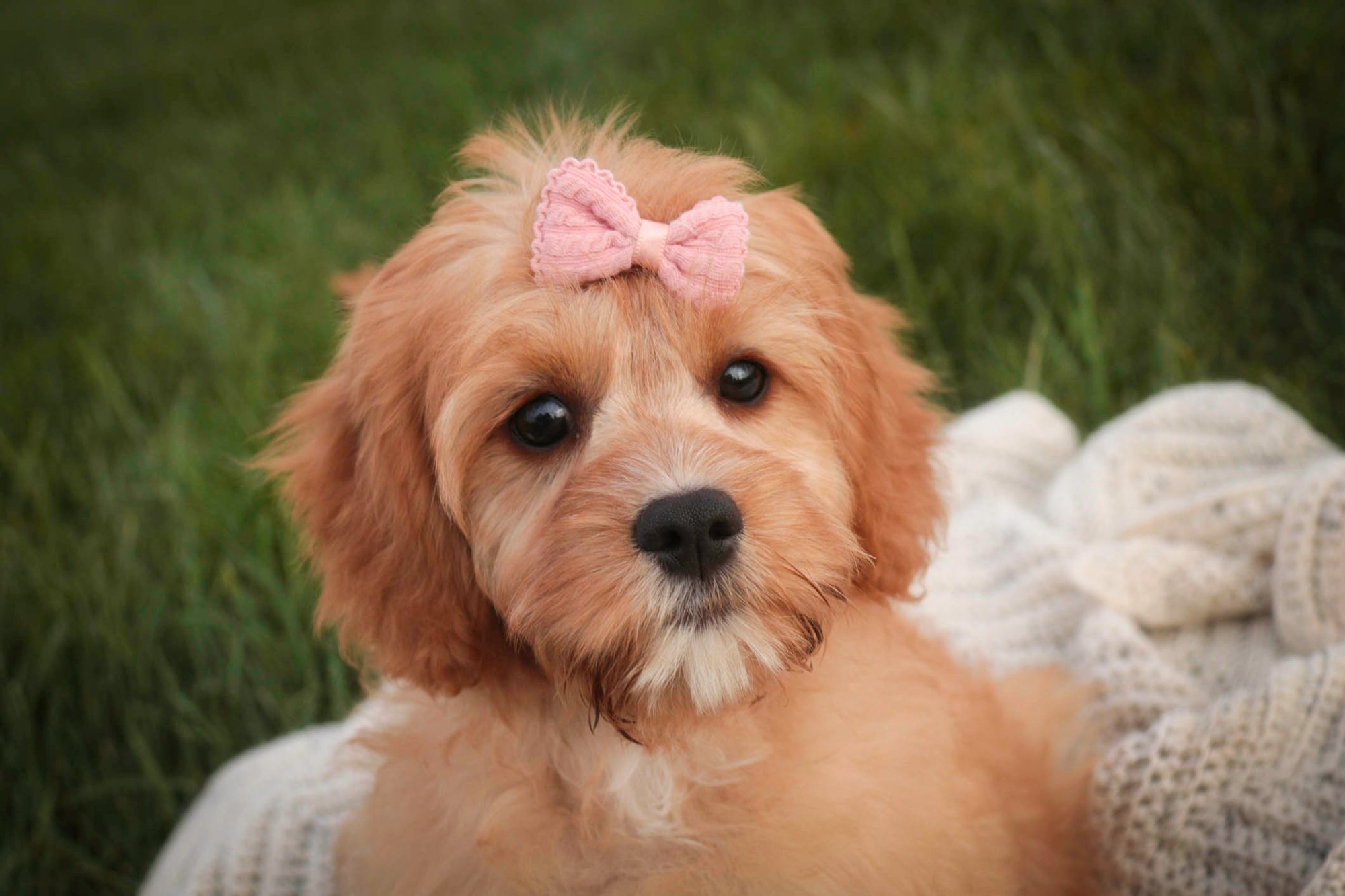
Havilah
Adopted!

Breed guide

A Bernedoodle's coat is described by two things: its colors, and the pattern they are laid out in. Merle, phantom and parti are patterns. Red, black and blue are colors. Most coats are a mix of the two.
Each section below explains one of them and, where our current litter has it, shows you the puppies who wear it. Every puppy in the litter is the same price whatever its color.
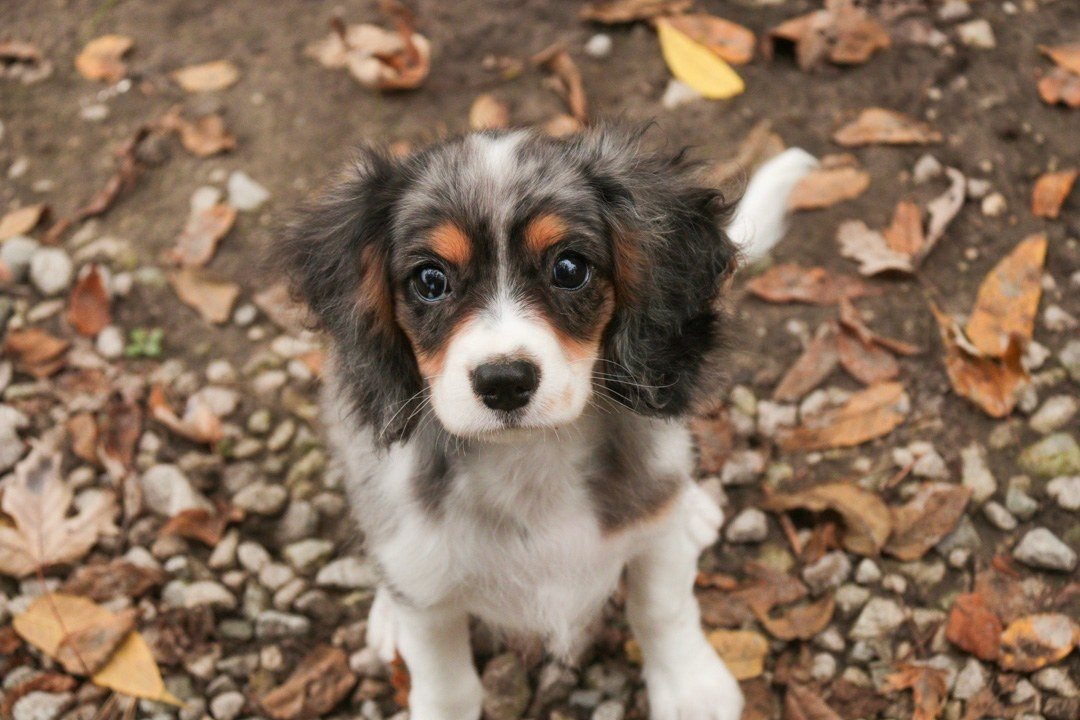
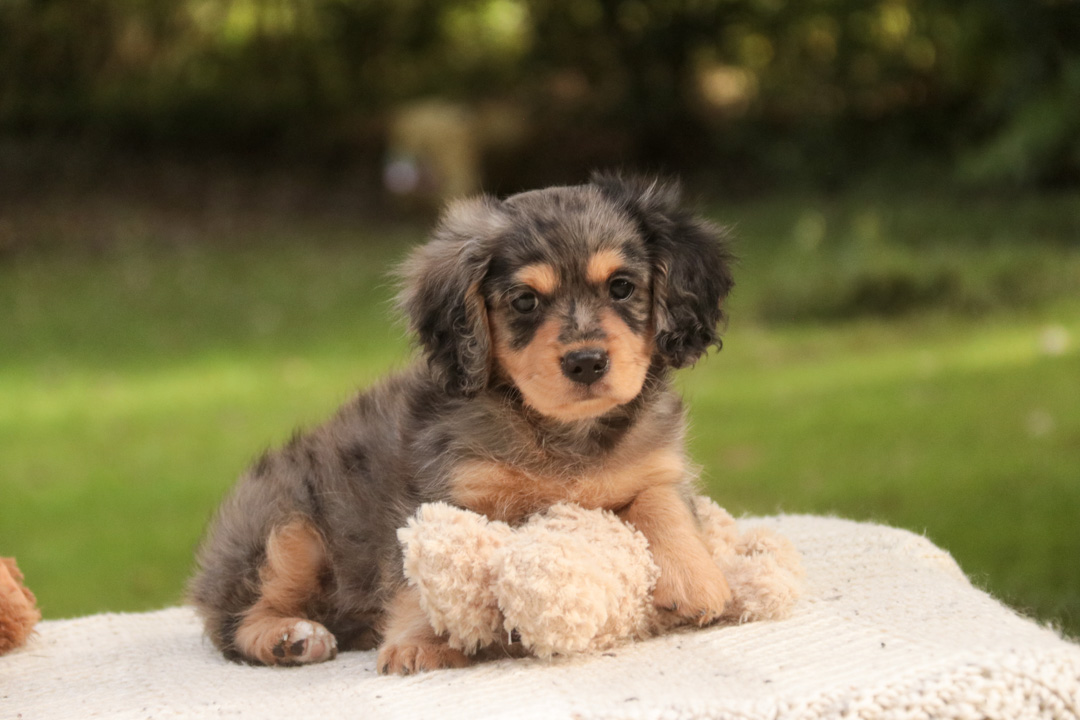
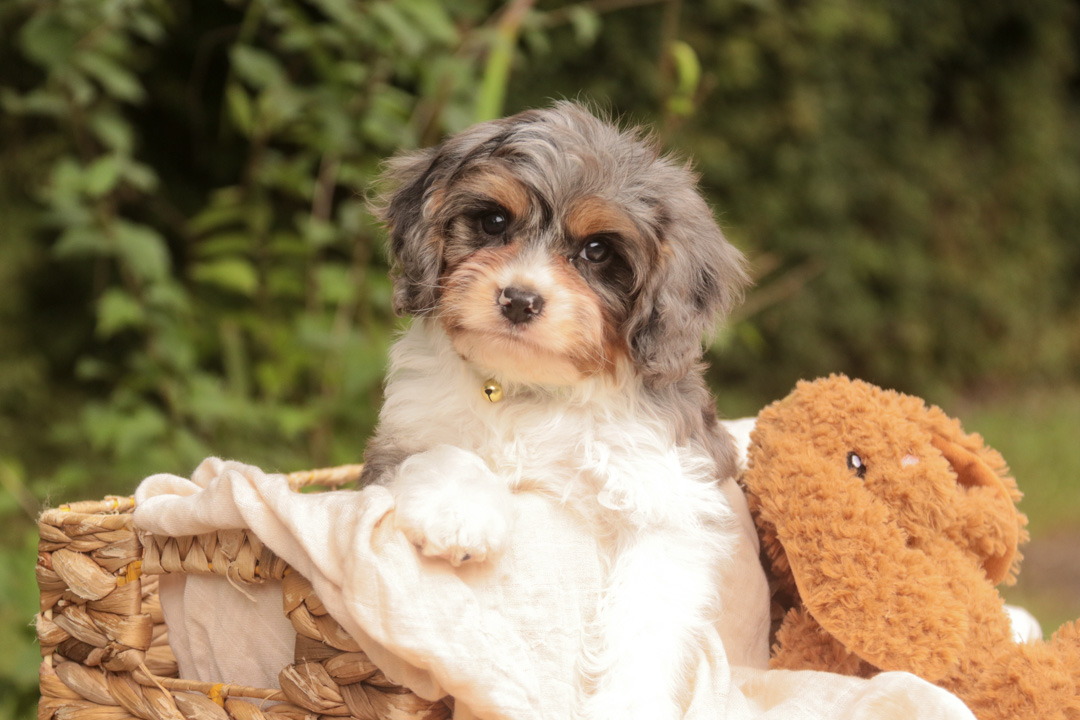
Merle is a pattern rather than a color. Patches of full color sit over a lighter, diluted version of the same color, so the coat looks marbled. On a blue merle the patches are black and the diluted areas read as gray or silver-blue, and no two merle coats are marked the same way. Merle is incompletely dominant, so one copy is usually enough for the pattern to show. Puppies that inherit merle from both parents, called double merles, may have hearing, eye and skeletal defects, which is why careful breeders do not pair two merle dogs.
In this litter
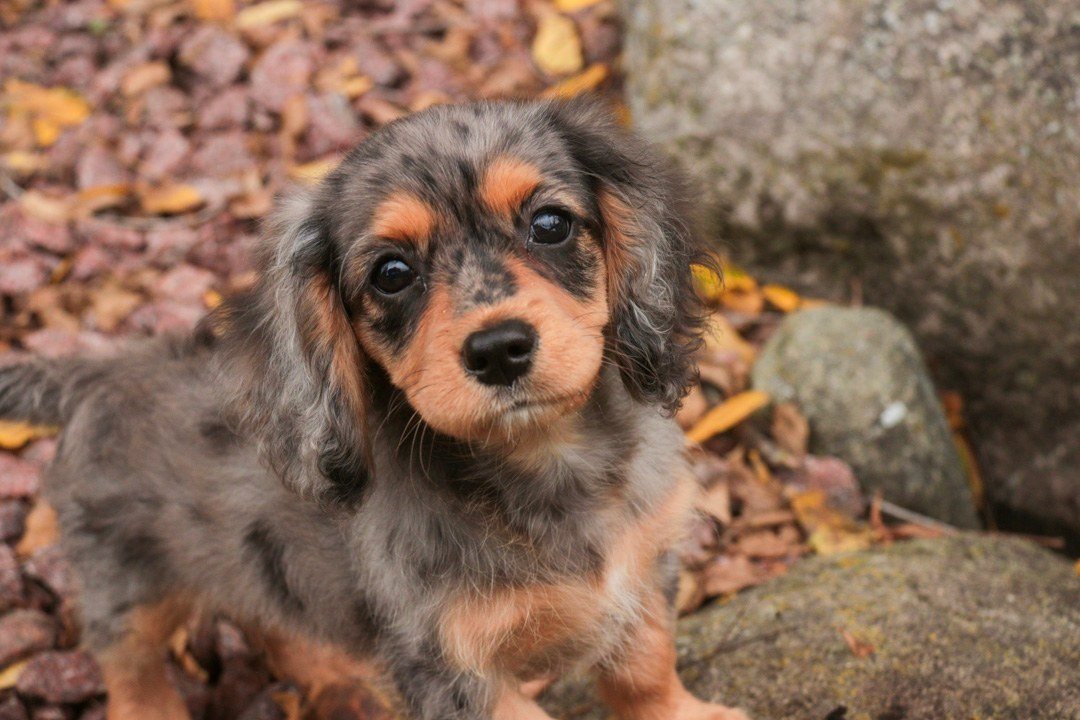
A phantom coat is one main color with lighter markings in set places: above the eyes, on the muzzle, the chest and the legs, and under the tail. The markings are usually tan. A phantom can also be merle, which gives the marbled coat the same points. They fall where the rust sits on a Bernese Mountain Dog or the tan on a black and tan Cavalier. Two genes work together to place them: MC1R, which switches between black and red pigment, and ASIP, which controls where each appears.
In this litter
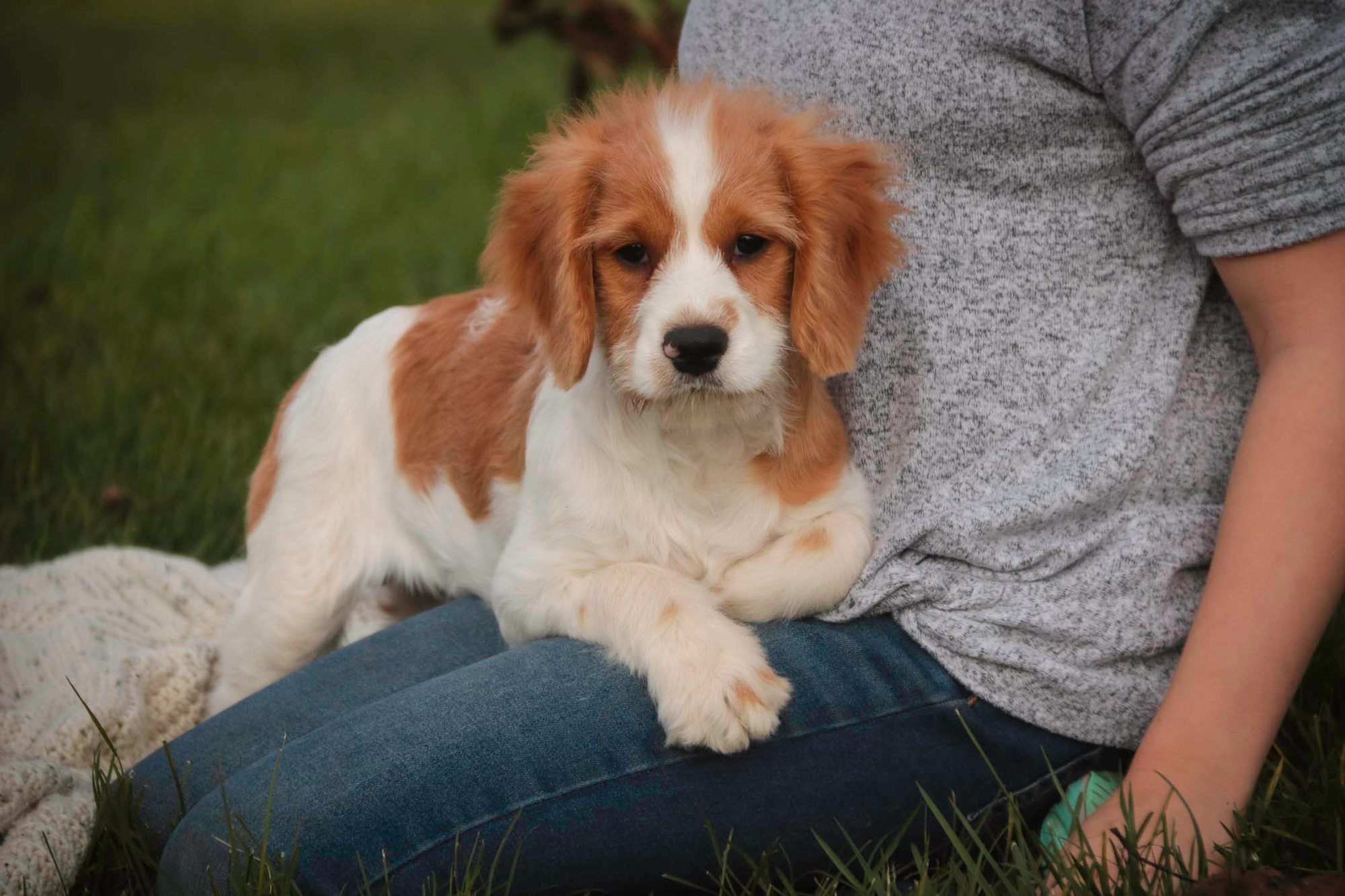
A parti coat is mostly white with large patches of color. The patches can be any color the dog carries, including merle, so a blue merle parti is a white coat with marbled blue patches. Geneticists call this piebald or random white spotting. How much white a dog shows varies a great deal, and the markings are often uneven from one side to the other.
In this litter
Red runs from a light, warm red to a deep mahogany, and it can be solid or paired with white. Our sire is a ruby Cavalier, which is the Cavalier name for solid red. Whether a dog makes red or black pigment is controlled largely by the MC1R gene.
In this litter
Tri color is the classic Bernese look: a dark base with white on the face, chest and paws and tan or rust points on the eyebrows, cheeks and legs. The Bernese breed standard asks for a jet black base with rust over each eye, on the cheeks, the chest, all four legs and under the tail, and a white blaze and muzzle band.
The parents
The litter's mom, Troy, is a blue merle parti Mini Multi Gen Bernedoodle, and their dad is a ruby Cavalier King Charles Spaniel. A puppy's coat can lighten or shift as the adult coat comes in, so if color matters to you, ask us what we are seeing as your puppy grows.
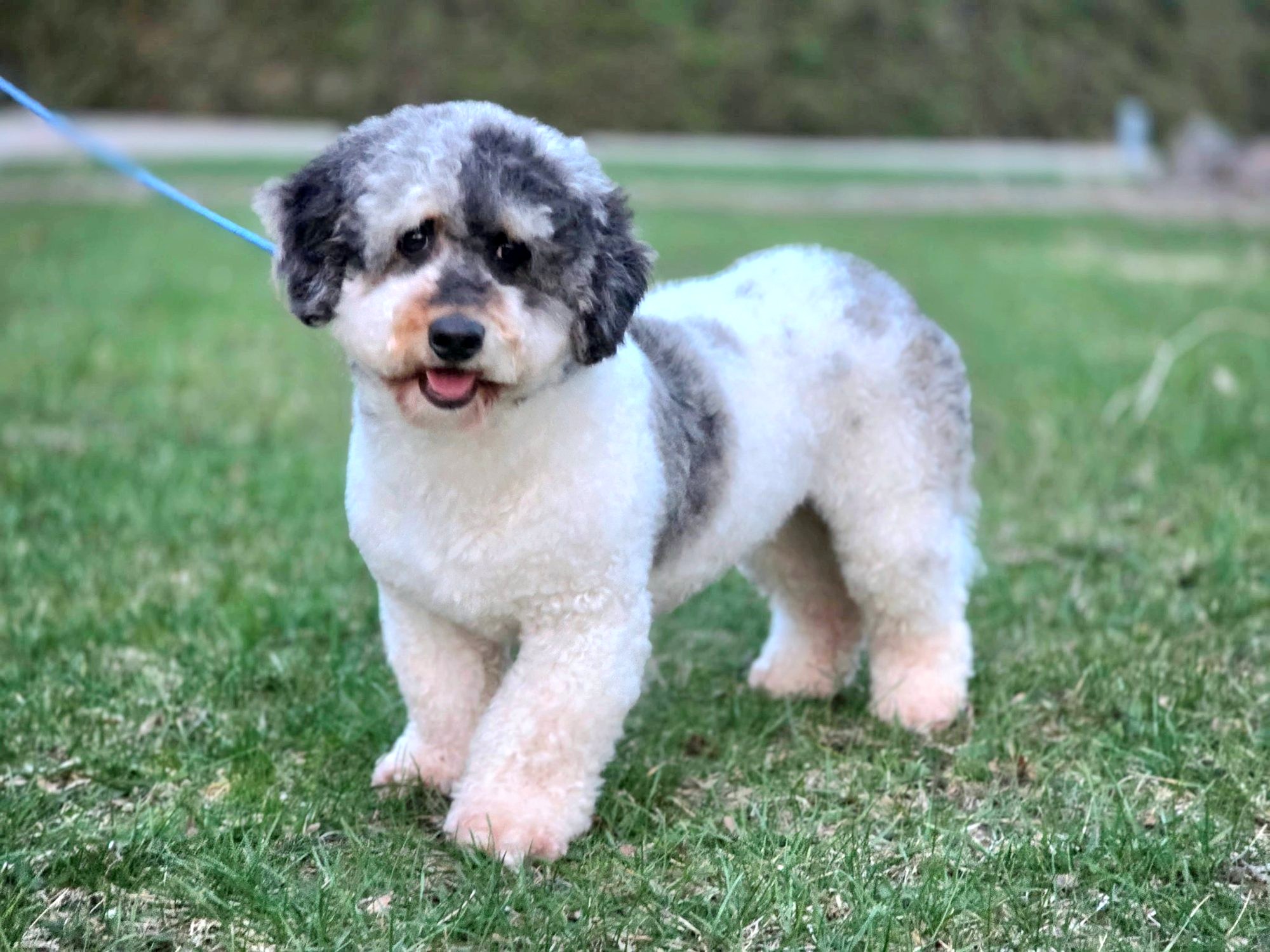
Troy
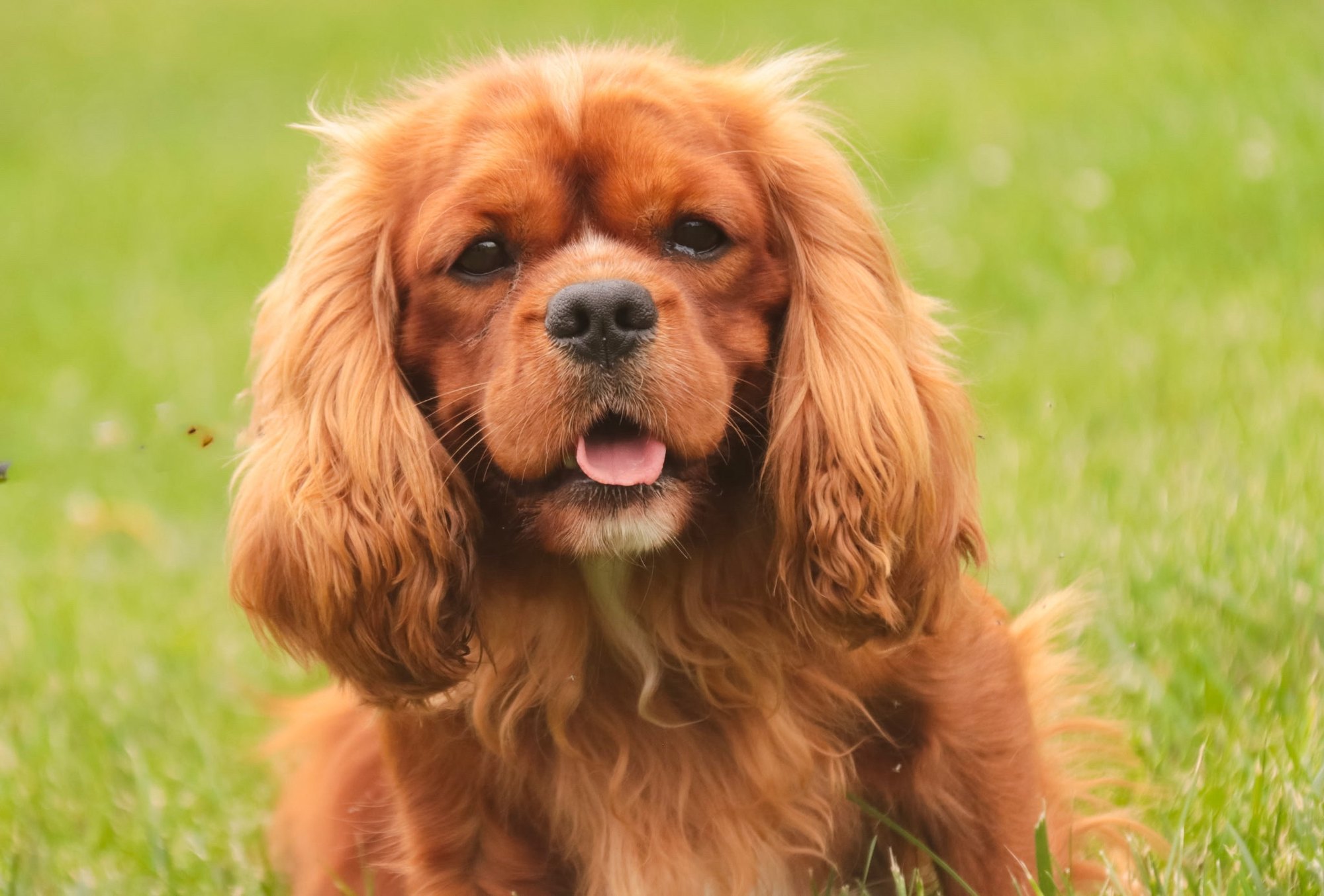
Bip Finch
More from the breed guide
What is a Munchkin Bernedoodle? · Full grown size · Munchkin vs Mini vs Micro · Shedding and allergies · Lifespan and temperament · Price and cost
See every puppy in the litter, with their colors.